
The aim is to help people reshape their reactions. It builds the capacity to regulate emotions and creates automatic reactions of safety and connection.
Background of polyvagal theory
Polyvagal theory was developed in 1994 by Dr Stephen Porges. It is based on three reactions:
- Fight
- Flight
- Freeze
The starting point is how the autonomic nervous system works. The terms fight and flight are often used when we talk about the nervous system. Polyvagal theory works these mechanisms out further and sharpens them.
Learning to recognise the state you are in
Learning to recognise the state you are in can help you to get into another state. For example, you can learn to come into a state of safety or contentment and out of a state of fear or flight.
Neuroception
Neuroception is a term used in polyvagal theory. It is an unconscious process that continuously ‘scans’ the environment, our body and signals in relationships for danger. Experiences stored earlier form the basis for this automatic assessment. A certain posture or facial expression of someone can already cause an automatic reaction: being startled, taking distance, fleeing.
If this reaction happens in a safe environment, there is probably more going on. The automatic reaction of the body has, as it were, got ‘stuck’. There is probably trauma.
Safe and Sound Protocol (SSP)
The Safe and Sound Protocol was developed by Dr Porges. The aim is to reduce stress and sensitivity to sound with a five-day listening intervention, and to stimulate engagement and resilience.
By calming the physical and emotional state you are in, room arises for better communication and a good basis for other forms of therapy. SSP is used in combination with trauma therapy, among other things.
The vagus nerve
The most important nerve in this theory is the vagus nerve, the tenth cranial nerve. This nerve influences various functions and automatic reactions in the body. Of all the cranial nerves, the vagus nerve is the most complex. It influences functions that have to do with the heart, lungs, gullet, pancreas, stomach and bowel, the circulation and certain emotional reactions.
Stimulation of the vagus nerve can reduce stress, inflammation, anxiety and chronic illness. Reactions between brain and nervous system can be influenced positively by massage, meditation and yoga that focus on specific groups of nerves.
The theory is integrated into existing (trauma) therapies and is used by various professionals, such as psychologists, psychiatrists, haptotherapists and other care providers.
For whom?
People who benefit from therapies that apply polyvagal theory include people with:
- Trauma
- Anxiety
- Depression
- Autism
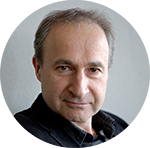
Prof. dr. Jim van Os, Chair Division Neuroscience, Utrecht University Medical Centre. Jim works at the interface of ‘hard’ brain science, health services research, art and subjective experiences of people with ‘lived experience’ in mental healthcare.
Jim has been appearing on the Thomson-Reuter Web of Science list of ‘most influential scientific minds of our time’ since 2014. In 2014 he published his book ‘Beyond DSM-5‘, and in 2016 the book ‘Good Mental Health Care’. In 2026 he published 'Wat psychisch lijden is'.
Want to read more?
Blogs by Jim van Os can be read here
Did you know that PsychosisNet regularly posts new content?
Online tests
Compare antidepressants tool
Compare antipsychotics tool
Podcasts
Books