Let us look more closely at what the autism spectrum is, which sensitivities and talents go with it, and how it fits within the concept of neurodiversity.
Autism spectrum
The autism spectrum describes a pattern of differences in social interaction, communication, perception and behaviour. How much support someone needs differs greatly from person to person and from situation to situation.
Characteristics of the autism spectrum:
- Social interaction: A different way of reading and giving social signals, such as facial expressions and body language. Misunderstandings are often mutual: persons with and without autism sometimes understand each other equally badly (the double empathy problem).
- Communication: Ranging from speaking little or not at all to very advanced language skills, but often with difficulty starting or keeping up conversations.
- Repetitive behaviour: A preference for routines and repetitive activities. This can help with a sense of predictability and safety.
Sensitivities:
- Sensory overstimulation: Persons with autism can be oversensitive to sounds, lights, smells and touch, which can lead to stress and discomfort.
- Change: Unexpected changes in routines or surroundings can be overwhelming and lead to anxiety or panic.
Talents:
- Eye for detail: Many persons with autism have a remarkable eye for detail and are good at recognising patterns.
- Special interests: Deep knowledge and expertise in specific subjects of interest.
- Systematic thinking: The skill of understanding and analysing complex systems and processes.
Sensitivities and talents
Within neurodiversity, the autism spectrum illustrates the rich diversity within human neurological and psychological development.
The autism spectrum and sensitivities:
- Persons with autism often have a strong need for structure and predictability. This can mean that they function better in environments where routines are consistent and expectations are communicated clearly.
- Sensory sensitivities can be managed by creating an environment that reduces stimuli, such as quiet spaces and avoiding bright lighting or loud noises.
The autism spectrum and talents:
- The eye for detail and deep focus can be very valuable in professions that require precision, such as scientific research, programming or art.
- Encouraging special interests can lead to expertise and career opportunities in those specific areas.
Conclusion
By recognising and valuing the unique sensitivities and talents of people on the autism spectrum, we can create a more inclusive society that benefits from the contributions of all individuals. It is essential to design environments that support and value this diversity, at school, at work and in daily life.
Read more: Autism calls for recognition, not a cure.
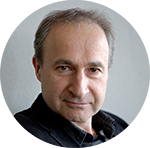
Prof. dr. Jim van Os, Chair Division Neuroscience, Utrecht University Medical Centre. Jim works at the interface of ‘hard’ brain science, health services research, art and subjective experiences of people with ‘lived experience’ in mental healthcare.
Jim has been appearing on the Thomson-Reuter Web of Science list of ‘most influential scientific minds of our time’ since 2014. In 2014 he published his book ‘Beyond DSM-5‘, and in 2016 the book ‘Good Mental Health Care’. In 2026 he published 'Wat psychisch lijden is'.
Want to read more?
Blogs by Jim van Os can be read here
Did you know that PsychosisNet regularly posts new content?
Online tests
Compare antidepressants tool
Compare antipsychotics tool
Podcasts
Books