From herbs to microdosing: what has some evidence?
Rogier Hoenders, a Dutch psychiatrist and professor of meaning, lifestyle and mental health care, has done pioneering work here and argues for a wider view of mental health.
This does not mean that we should all trade in our antidepressants for lavender tea and a handful of saffron. But perhaps we can look more widely at what works and what suits a person. Mental pain is not a mathematical formula, not a story of ‘symptom plus pill equals cure’.
Natural remedies that can have an effect
Several categories of natural remedies show an effect in sound studies.
Herbs
Herbs such as St John’s wort (for mild to moderate depression), lavender (for anxiety), valerian (for sleep and restlessness), saffron (a possible antidepressant effect) and Xiao Yao San (a traditional Chinese herbal mix with indications of an effect on stress and anxiety) have shown an effect in studies. But take care: St John’s wort can interact with antidepressants and contraception, for example. So do not just start experimenting.
Supplements
Among supplements, omega 3 is perhaps the best studied, especially for depression. SAMe (S-adenosylmethionine) can help some people with depressive complaints. CBD (the non-psychoactive component of cannabis) seems to have an effect on anxiety and sleep problems in some people. Melatonin is another story: useful for problems with the sleep rhythm, but not always the solution for insomnia.
Vitamins and minerals
Vitamins and minerals such as folic acid, vitamin D and B12 can play a part, especially when there is a deficiency. And deficiencies are more common than you think, especially in people with mood complaints. Magnesium and zinc are also interesting, certainly for stress and anxiety. But remember: more is not always better. An overdose of zinc, for example, is not a good idea.
Probiotics
Gut bacteria and mental health really do have something to do with each other. Lactobacillus and Bifidobacterium strains have been studied in relation to stress, anxiety and mood. The gut-brain story is still developing, but it seems more and more plausible that a healthy gut contributes to a healthier mind.
Psychedelics and microdosing
Then the category about which most people are either wildly enthusiastic or deeply sceptical.
Psychedelics
Classic psychedelics such as psilocybin (magic mushrooms), ayahuasca and peyote show possible effects in depression and trauma, but they are illegal in most countries. The law differs from country to country.
Microdosing
Microdosing is another story. Small doses of psychedelics, but also of antidepressants and even lamotrigine (used for bipolar mood susceptibility), are being studied more and more. The theory is that they can give subtle support without the heavy side effects of regular doses.
Why does this fit in evidence-based mental health care?
Mental health care traditionally leans on a medical model. But if you look at what makes treatment effective, every effective treatment has three components: a ritual, a relationship and a shift experience (the experience that change is possible or that you can bear things better).
Whether you take an antidepressant, go into therapy or take a lavender capsule, it only really works in a context that has meaning for you. The ritual has to fit your values, the relationship (with yourself, the person who treats you or your social circle) has to be safe and supportive, and you need a sense of movement in your process.
Pills without context? Not much. Therapy without trust? Does not work either. Lavender capsules without belief in them? Just the same. Everything turns on the synergy between these elements.
What do you have to watch out for?
Before you fill your basket with saffron, probiotics and a microdosing kit: not everything is without risk. Some herbs and supplements have serious interactions with medication, some psychedelic therapies can be risky without guidance, and the quality of many products varies enormously.
- Quality of preparations differs enormously. Do not just buy something online.
- Contamination can be a risk, especially with herbal mixes and supplements from less regulated markets.
- Side effects and interactions can be serious. St John’s wort can cause serotonin syndrome when you use an SSRI, for example.
- Not everything suits everyone. What works for one person does nothing for another. A tailored approach is essential.
Conclusion: no miracle cures, but possibilities
Are natural remedies the solution for mental pain? No, but regular medicines and therapies are not always that either. More and more studies do show that they can play a part, provided there is good guidance and they suit the person.
So perhaps it is time to look more widely, alongside medication and therapy. At lifestyle, at food, at herbs, supplements and (with the right guidance) even microdosing. As an addition, not as a replacement. As Rogier Hoenders says: “We should not only give people with mental health problems pills or therapy. They can also get better from things like mindfulness, running or Chinese herbs.”
Perhaps it is time for mental health care to widen its horizon. Not either pills or alternatives, but looking at what works. Per person. Per situation. And always with the right knowledge and caution.
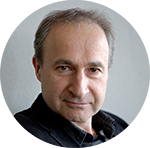
Prof. dr. Jim van Os, Chair Division Neuroscience, Utrecht University Medical Centre. Jim works at the interface of ‘hard’ brain science, health services research, art and subjective experiences of people with ‘lived experience’ in mental healthcare.
Jim has been appearing on the Thomson-Reuter Web of Science list of ‘most influential scientific minds of our time’ since 2014. In 2014 he published his book ‘Beyond DSM-5‘, and in 2016 the book ‘Good Mental Health Care’. In 2026 he published 'Wat psychisch lijden is'.
Want to read more?
Blogs by Jim van Os can be read here
Did you know that PsychosisNet regularly posts new content?
Online tests
Compare antidepressants tool
Compare antipsychotics tool
Podcasts
Books